

Haven't been to one of our Native American Dance & Music Festivals yet? Perhaps you want to see who are our special guest performers this year? Or maybe you just want a little something to get you excited to attend again? Well, I've got just the thing for you - check out the following video!
-kim
Tuesday, July 6, 2010

Monday, June 28, 2010
Berries, Berries, Berries!

While the season for wild strawberries has passed, more wild berries have come into season - black raspberries (aka "black caps"), juneberries, and mulberries. We're enjoying all three of these berries at my place. The wild black raspberry bushes are a bit sparse this year at my place - some years are just better than others. But the black raspberries we have managed to pick are really wonderful tasting. My grandfather was a dairy farmer and loved the wild berries he would pick with fresh cream. It must be in the blood because if I'm not eating them fresh out-of-hand, I like them with good quality vanilla ice cream.
Juneberries (aka serviceberries, saskatoons) are not known by as many people as black caps but they should be. They are a wonderful treat with their blueberry-like flavor and almond aftertaste. I honestly don't understand why more people don't plant serviceberries in their lawns and gardens. They are a beautiful Spring bloomer, produce copious amounts of tasty fruit, and are an attractively shaped hardy and pest-free, native bush/small tree. Plus if you have the "wrong" soil for blueberries like me, these are a great alternative.
Mulberries are another little known fruit in the US. The North American native mulberry species is the Red Mulberry (Morus rubra) but most "wild" mulberries trees are actually a cross of the introduced White Mulberry (Morus alba) and the Red Mulberry. Either way, these medium-sized trees produce oodles of fruit that are loved at my house by every bird in the area as well as the humans! The mulberry fruit tastes like...well, a mulberry! But I guess it can be best described as being similar in taste to a raspberry. I've heard people curse these trees in their landscape because the dropped fruit is "messy." I think they are incredibly silly and my suggestion to them is to pick the fruit and eat it or use it for their favorite berry recipe. One of the best tasting pies I have *EVER* made was a mulberry pie made with berries from our trees.
So to get you wanting to do some berry picking of your own, here is a Berry Cobbler recipe. Use your favorite berries and enjoy!
Berry Cobbler
2 cups fresh berries of your choice, cleaned & drained
1/4 cup butter
1 cup sugar
1 cup flour
1/4 tsp salt
2 tsp baking powder
1/2 cup milk
1/4 tsp cinnamon
1 1/2 cups water
Cream butter and 1/2 cup sugar. Mix flour, salt, and baking powder. Add to creamed mixture alternately with milk. Beat until smooth. Pour evenly into 2 quart buttered casserole. Spoon berries over batter. Mix 1/2 cup sugar and cinnamon. Sprinkle over fruit. Pour water over the top. Bake at 375 degrees for 45 - 50 minutes. During baking, fruit and juice will go to the bottom and a cake-like layer forms on the top. Serve warm with ice cream or whip cream. Serves 6-8.
By the way, if you enjoyed this recipe, be sure to check out our Recipes page. We are always adding more recipes of foods that are indigenous to the Americas.
-kim
Thursday, June 17, 2010
The Wheel Keeps Turning
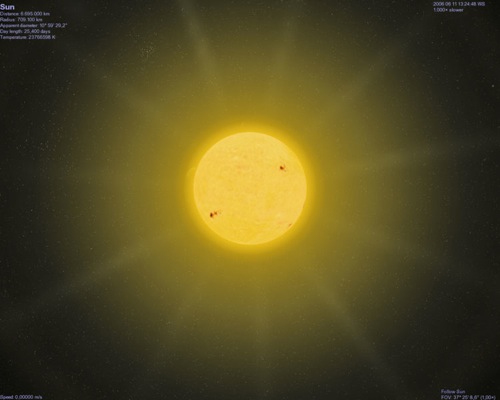
With each solstice, equinox, and some of the other seasonal year markers like May Day and Halloween, I take note of the specialness of the day. It makes me feel different. It makes me feel part of something bigger and I guess I am since I am a passenger on our great Mother Earth as she makes another circle around the Sun.
Depending upon the season I celebrate the day in different ways - for May Day, I visit a park and enjoy the Spring wildflowers and the regreening of the Earth. For the Winter Solstice, I go outside at night and let the quiet stillness of Winter and the icy, twinkling stars fill me. And since the Summer Solstice is all about the Sun, I rise as early as I can to greet the Sun as it sets off to make its journey across the sky.
Our ancestors throughout history and throughout the world have also taken special note of these times as well. Not only did they take note, but they built markers, monuments, and sacred sites to note our yearly path around the sun and other astronomical events. They created giant calenders and celestial observatories made out of stone, wood, and earth - some of these surviving to our modern day.

So while you may not have Stonehenge in your backyard or the Bighorn Medicine Wheel around the corner, the Sun will rise above your home just the same as these special places come Monday. Rise early. Greet the Sun and be thankful for the Sun's warming rays. Be thankful for being a passenger on the great yearly trip around the Sun once more. Be thankful for all the blessings that are yours. And if you have a special place in your yard or garden, take 2 sticks. Push one into the ground. And as the Sun breaks the horizon Monday morning, line up the Sun, the first stick and the second stick. Push the second stick into the ground. Later find two special rocks and replace the sticks with those rocks. They will mark not only the Summer Solstice for you all year long but the blessings you have to be thankful for as well.
-kim
Monday, June 7, 2010
Wild Strawberries - Red Ambrosia
Have you had any wild strawberries yet?
I picked some tonight and shared with my children. Mmmmm...nothing like them. Strawberries are something that "bigger is not always better" definitely applies to. The wild strawberry has so much favor and sweetness packed into that tiny red berry. Those red behemoths that you find on your grocer's shelves so pale in comparison in every way save the size.

Home-grown strawberries are better than the usual supermarket fare so if you don't have access to wild strawberries (which many don't) or your own strawberry patch, find homegrown strawberries at your local farmers' market or a U-pick farm. And I do recommend picking your own. There's nothing like harvesting your own food - whether it be wild grown or cultivated. And share the experience with the young ones in your life. Teach them about growing and harvesting food. Their life will be richer for it.
A few sweet facts about strawberries.....
-kim
I picked some tonight and shared with my children. Mmmmm...nothing like them. Strawberries are something that "bigger is not always better" definitely applies to. The wild strawberry has so much favor and sweetness packed into that tiny red berry. Those red behemoths that you find on your grocer's shelves so pale in comparison in every way save the size.

Home-grown strawberries are better than the usual supermarket fare so if you don't have access to wild strawberries (which many don't) or your own strawberry patch, find homegrown strawberries at your local farmers' market or a U-pick farm. And I do recommend picking your own. There's nothing like harvesting your own food - whether it be wild grown or cultivated. And share the experience with the young ones in your life. Teach them about growing and harvesting food. Their life will be richer for it.
A few sweet facts about strawberries.....
- One of the ceremonies of the Haudenosaunee (Iroquois) ceremonial year celebrates the strawberry
- The strawberry is not a berry at all. It is an Accessory fruit
- The cultivated garden strawberry is a cross between 2 New World strawberry species
- Strawberry leaves make a nice tea
- The strawberry is a member of the Rose family
- The strawberry is the only fruit to have its seeds on the outside
- Strawberries are grown in every state in the United States and every province in Canada
- The US is the top producer of strawberries in the World
- Strawberries have 9 vitamins & minerals (Calcium, Iron, Magnesium, Phosphorus, Potassium, Selenium, Vitamin C, Folate, Vitamin A) and their leaves Vitamins C and K.
- 94% of US households consume strawberries
- The strawberry is recognized as representing absolute perfection in the Victorian language of flowers
- Strawberries have a very short season - approximately 2 weeks near the Summer Solstice
- The wild strawberry was the first plant to colonize the rim of Mount St. Helens after its 1980 eruption
- The strawberry is of the genus Fragaria. The word, 'fragaria' comes from the Latin word meaning fragrant
- The strawberry plant was used medicinally in Europe and by the Native peoples of North America

-kim
Thursday, May 27, 2010
The Planting Moon

Perhaps you know it already, but each full moon goes by many different names around the world. Many of these names indicate seasonal activities or traits of the season, such as the "Planting Moon" or the "Harvest Moon." Check out this link for a list of some the full moon names.
And if you haven't yet planted your seeds, this long holiday weekend is a perfect time. Rather than going to the beach or picnics at a park, this is exactly how I usually spend my holiday weekend - in the sun and dirt with seeds in my hands.

So unless you get exactly the same varieties of a vegetable each year, you'll have leftovers like me. Take those tiny handfuls of seeds from previous seasons mix them and plant a row. The most enjoyable rows of beans I ever grew were the rows of pole beans I grew the last two years where I did just this. The rows were highly productive over a long period since all the varieties mature at slightly different rates. And the mixed bean harvest had a variety of color and taste on the dinner plate.
And on that subject....if you are not already a fan of pole beans, I urge you to try some this year. Most gardeners have more desire for plants than garden space. Pole beans are an excellent producer for the small footprint they take up in the garden. They grow up, not out. You sow them rather thickly and let them climb. You don't need anything fancy or complicated for them to climb on. Long sticks and poles work just fine and hey, those do grow on trees!
Have a wonderful holiday weekend and join me (at least in spirit) in the sun and rich earth of the garden!
-kim
Wednesday, May 12, 2010
Native Plant Smackdown

Need more info: What are native plants? and How to and why to plant native plants
Sun-loving Perennials:
Purple Coneflower (Echinacea purpurea)
Pale Purple Coneflower (Echinacea pallida)
Tennessee Purple Coneflower (Echinacea tennesseensis)

Butterflyweed (Asclepias tuberosa)
Common Milkweed (Asclepias syriaca)
Asters - multiple varieties (Asters spp.)
Goldenrod - multiple varieties (Solidago spp.)
Blue False Indigo (Baptisia australis)
Tickseed (Coreopsis lanceolata)
Joe Pye Weed (Eupatorium purpureum)
Boneset (Eupatorium perfoliatum)
Queen of the Prairie (Filipendula rubra)
Jerusalem Artichoke (Helianthus tuberosa)
Perennial Sunflower (Helianthus maximillian)
Bee Balm (Monarda didyma)
Sundrops (Oenothera fruticosa)
Black-eyed-Susan (Rudebeckia hirta)
Roseroot (Rhodiola rosea)
Mountain Mint (Pycanthemum virginianum)
Cherokee Sweet Mint (Pycanthemum incanum)
Blue Vervain (Verbena hastata)
Indian Hemp (Apocynum cannabinum)
Wild Qinine (Parthenium integrifolium)
Shade-loving, Woodland Perennials:
Wild Ginger (Asarum canadense)
Labrador Violet (Viola labradorica)
Red Trillium (Trillium erectum)
White Trillium (Trillium grandiflorum)
Prairie Trillium (Trillium recurvatum)
Solomon's Seal (Polygonatum peltatum)
Mayapple (Podophyllum peltatum)
White Baneberry (Actaea pachypoda)

Black Cohosh (Cimicifuga racemosa)
Bleeding Heart (Dicentra eximia)
Goldenseal (Hydrastis canadensis)
Twinleaf (Jeffersonia diphylla)
Ramps (Allium tricoccum)
American Spikenard (Aralia urticifolia)
Partial Sun/Shade Perennials:
Wild Columbine (Aquilegia canadensis)
Wild Geranium (Geranium maculatum)
Woody Plants - Trees/Shrubs:
Kinnikinnick (Arctostaphylos uva-ursi)
Sweet Birch (Betula lenta)
Sweet Shrub (Calycanthus floridus)

Fringe Tree (Chionanthus virginicus)
Grey Dogwood (Cornus racemosa)
Flowering Dogwood (Cornus florida)
American Hazel (Corylus americana)
Witch Hazel (Hamamelis virginiana)
Spicebush (Lindera benzoin)
Pussy Willow (Salix discolor)
Elderberry (Sambucus canadensis)
High Bush Cranberry (Viburnum trilobum)
Arrowwood (Viburnum dentatum)
Serviceberry (Amelanchier canadensis)
American Hornbeam (Carpinus caroliniana)
Washington Hawthorn (Crataegus phaenopyrum)
Persimmon (Diospyros virginiana)
American Beech (Fagus grandifolia)
Tuliptree (Liriodendron tulipifera)
Red Pine (Pinus resinosa)
Slippery Elm (Ulmus rubra)
Vines:
Wild Yam (Dioscorea villosa)
Feel free to post your own native plants list (via a comment to this post) or perhaps let us know how the plants you purchased from the native plant vendors we had at our Native American Dance & Music Festival last year are doing.
If you are feeling a bit confused and would love to read more, my favorite book on native plants of this region is Native Plants of the Northeast by Donald Leopold. I've included a link to the right for this book. Enjoy and go native!
-kim
Wednesday, May 5, 2010
Recycle Craft - Plant Markers
 Traditionally Native peoples, like all early cultures, made the utmost use of the materials at hand. There were no Mega-Marts. No pre-fab kits. You made what you needed or perhaps traded with someone who could. So beyond just the respect for Mother Earth and her finite resources, I think recycle crafts are a modern incarnation of that ancient creative and ingenious spirit of our ancestors to use, re-use, and re-purpose materials at hand for all their needs.
 The following is a simple recycle craft to create plant markers or labels out of containers that would have been otherwise thrown in the recycle bins.
Materials Needed:
• Plastic container -
#2 plastic 1-gallon works best
• Scissors
• Permanent Markers

1.) Clean and dry containers as needed.
2.) Using sturdy craft scissors or kitchen shears, cut sections out of the container. Cutting along corners to maximize flat usable surfaces is best.
Cut off the bottom and save.

If there are curves or uneven spots, do not worry. The last step addresses that.
4.) Make two cuts at the end of each strip to create a point.
 5.) Use a permanent marker to write the plant's name or other information on the label.
 Since I try lots of different heirloom varieties of vegetables each year, I use lots of these markers in seed starting!
6.)After the permanent marker has dried, fold or crease the stake lengthwise. This will address any curved parts of the plant marker, give the label some stability, and will make these markers easier to push into the soil.

8.) The bottom saved earlier in an earlier step can be used too. I use it as a saucer for some of those young potted seedlings!
I hope you enjoyed this simple craft. If you have recycle ideas to share, post a link in the comments to this article or send them to us at friends@frontiernet.net. Thanks!
-kim
Subscribe to:
Posts (Atom)